


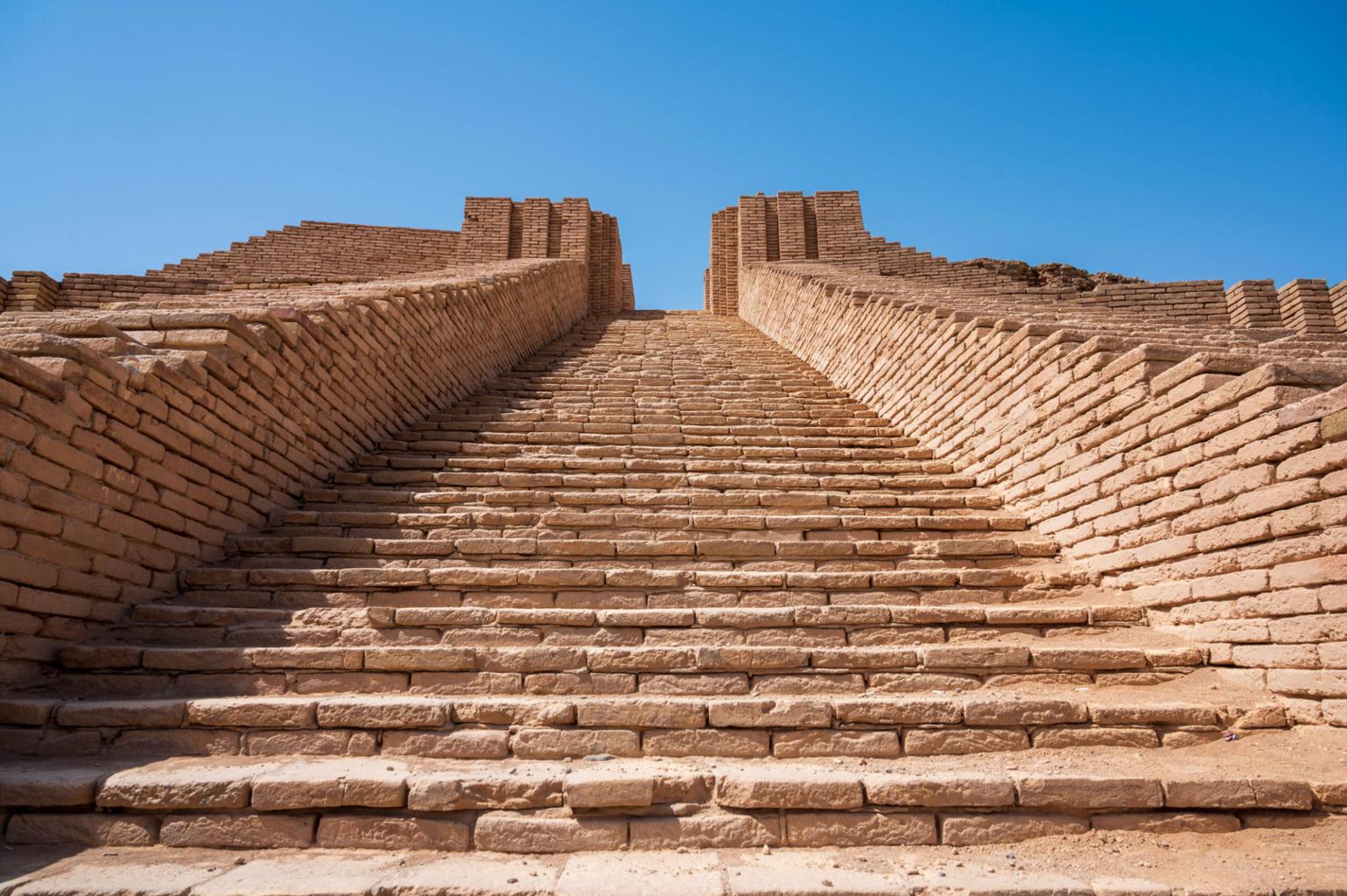


A ziggurat was a monumental temple structure built by the ancient civilizations of Mesopotamia, particularly the Sumerians, Akkadians, Babylonians, and Assyrians.
These buildings were massive stepped pyramids made primarily of mud bricks, often rising in several tiers above the surrounding city. At the top of the structure stood a temple or shrine dedicated to a specific god or goddess.
Unlike Egyptian pyramids, which were built as tombs, ziggurats served a religious and ceremonial purpose.
In Mesopotamian belief, the ziggurat functioned as a symbolic bridge between heaven and earth. The elevated temple allowed priests to perform rituals closer to the divine realm, reinforcing the idea that the gods watched over the city.
One of the most famous examples is the Ziggurat of Ur, built around 2100 BCE during the reign of King Ur-Nammu. Even today, its partially restored ruins stand in southern Iraq, offering a glimpse into the monumental architecture of the world’s earliest urban civilizations.
Ziggurats dominated the skylines of Mesopotamian cities and served as powerful symbols of both religion and political authority. Cities often identified themselves with the deity whose temple crowned their ziggurat, making these structures the spiritual heart of urban life in the ancient Near East.


